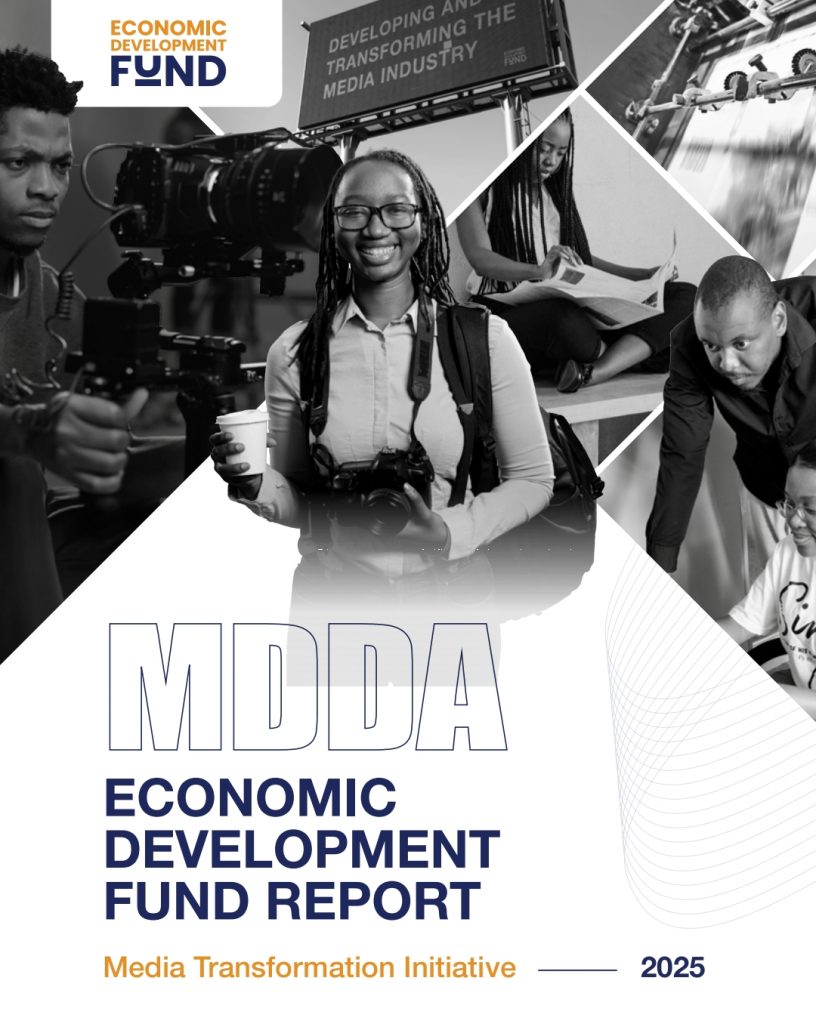
BMOA Welcomes MDDA Report and Calls for Permanent Media Sustainability and Transformation Fund

The Black Media Owners Association (BMOA) warmly welcomes the release of the Economic Development Fund (EDF) report.

An event was held at the Sandton Sun Hotel in Johannesburg on Tuesday, May 6, a gathering of media stakeholders including media owners and organisations supporting media development.

Stephen Seakgwe, Executive Director of the BMOA, said the association is encouraged by how the Media Sustainability and Transformation Fund has been implemented and concluded with professionalism and accountability.

“We commend the MDDA for this crucial work in highlighting both the challenges and opportunities within the South African media landscape.”

Stephen Seakgwe executive director at the BMOA speaking during the Q&A Session at the Launch of the MDDA Economic Development Fund in Sandton on May 6.

The Economic Development Fund (EDF) was established in 2017 from an agreement between the MDDA – Media Development & Diversity Agency and the The Competition Commission South Africa which is meant to redress the anti-competitive behaviour by mainstream media and advertising companies.

This report underscores the urgent need to address the long-standing anti-competitive practices of major media companies that continue to impede the growth and sustainability of black-owned media enterprises.

For too long, these practices have stifled diversity and hindered the true reflection of South Africa’s democratic and demographic realities within the sector.
The BMOA firmly believes that the EDF has demonstrated the potential to be a powerful catalyst for transformation and a vital instrument in leveling the playing field.

The report highlights that the EDF has supported over 37 SMMEs, with a significant 60% being youth-owned, and has also contributed to gender empowerment within the sector. Furthermore, the EDF has provided bursaries to over 80 students, investing in the future leadership of the industry.

The success stories showcased in the report, featuring beneficiaries like Touch SA Marketing, which launched one of the first digital billboards in the township of Soshanguve, and community publications like Pondoland Times and Empuma News, demonstrate the tangible impact of targeted funding in empowering black media owners, fostering innovation, and creating much-needed employment opportunities.

The Deputy Minister in The Presidency, Kenny Morolong, delivered the keynote address and hailed the partnership between the MDDA and the Competition Commission in administering the fund successfully.

However, the need for support is ongoing and systemic. Therefore, the BMOA strongly advocates for the establishment of a permanent Media Sustainability and Transformation Fund.

This dedicated fund would provide consistent and reliable resources to:

  • Redress the historical imbalances caused by anti-competitive behaviour, enabling black media businesses to compete effectively.
  • Drive genuine transformation within the media sector, ensuring ownership, representation, and content that truly reflects the diversity of South African society.
  • Act as a catalyst for mass employment, fostering the growth of a vibrant and inclusive media industry that contributes meaningfully to the nation’s economy.

“We have seen the positive impact on youth empowerment, gender equity, and the growth of black-owned media businesses. A permanent fund is now essential to build on this foundation and secure a sustainable and equitable future for the South African media landscape.”

The BMOA stands ready to collaborate with the MDDA, government, and all stakeholders to ensure the establishment and effective implementation of this permanent fund.

We believe that by working together, we can build a media landscape that is equitable, sustainable, and truly representative of the South African people.

Download the report here. 

BMOA Position on the Release of the Media and Digital Platforms Market Inquiry (MDPMI) Provisional Report

The Black Media Owners Association (BMOA) welcomes the release of the Media and Digital Platforms Market Inquiry (MDPMI) provisional report on 24 February 2025.

This report is a significant step in addressing the challenges faced by South African news media, particularly black-owned and community-based media entities. It brings to light the monopolistic practices of dominant digital platforms that continue to restrict fair competition and limit the growth of independent media in our country.

Key Findings in Simple Terms

The MDPMI report highlights several critical issues that have long impacted black-owned media:

Tech Giant Dominance: Large digital platforms have monopolized online advertising revenue, prioritizing international content over local news. This reduces audience reach and weakens revenue streams for South African publishers.

Unfair Revenue Distribution: Despite generating significant local engagement, community media outlets struggle to access a fair share of digital advertising revenue, leading to financial instability.

Financial Compensation Proposal: The report recommends that global tech companies allocate between R300 million and R500 million annually to South African media over the next three to five years. This would help balance the unfair revenue gap and provide much-needed sustainability for local publishers.

Strict Penalties for Non-Compliance: If digital platforms do not comply with these measures within six months of the final report, they could face penalties of up to 10% of their advertising revenue.

Black Media Owners: The Most Affected

Black media owners remain at the greatest disadvantage due to these monopolistic practices. The digital space should be an opportunity for growth and transformation, yet it has instead become another barrier to inclusivity. Local and township-based media struggle to survive because they are deprived of fair exposure and financial support.

BMOA’s Call to Action

While we support the findings and recommendations of the MDPMI, the BMOA demands immediate action to ensure fair competition and the growth of black-owned media in the digital space:

1. Direct Business Deals: Government departments and advertisers must engage directly with black-owned media instead of using intermediaries that exploit community publishers.

2. Black-Media Development Fund: We call for the establishment of a dedicated fund to provide financial resources, training, and technology support for black media owners to fully participate in the digital media economy.

3. Transparent Revenue Sharing: Digital platforms must ensure fair compensation for local content creators and publishers, ensuring that advertising spend is distributed equitably.

4. Capacity Building and Skills Development: Access to digital tools, resources, and training must be made available for community publishers to effectively transition into the online space and remain competitive.

5. Policy and Regulatory Reforms: The government must enact strong policies to prevent monopolistic behavior and create a level playing field for all media owners.

The BMOA remains committed to advocating for a fair and inclusive media environment where black media owners can thrive. We believe that the implementation of the MDPMI’s recommendations, coupled with direct government support and industry reforms, will pave the way for a sustainable and diverse media landscape in South Africa.

We stand firm in our demand for direct engagement, fair business practices, and the establishment of long-term solutions that will empower black media entrepreneurs to compete in the digital era. The future of South African media depends on inclusivity, transparency, and equitable access to resources.

Government recognizes media’s role in advancing democracy

The South African government has joined calls for the protection of journalists’ rights, particularly during a time when South Africa is preparing for national elections.

According the United Nations Educational, Scientific and Cultural Organization UNESCO violence against journalists intensifies during election cycles.

“Professional journalism and a free and objective press are cornerstones of democracy and serve to hold society accountable. We acknowledge the essential role journalists play in our democracy fighting for truth. We condemn any form of violence or intimidation against journalists domestically and internationally.

“South Africa remains committed to supporting a free and independent press. The protection of journalists is of utmost importance, as it is a form of protection of our own rights”, said Acting Director-General of the Government Communication and Information System (GCIS) Nomonde Mnukwa recently.

Following the assassination of two French journalists in Mali in 2013, the United Nations General Assembly adopted Resolution A/RES/68/163, which proclaimed November 2 as the International Day to End Impunity for Crimes Against Journalists. 

The resolution mobilises United Nations member states to intensify efforts to prevent violence against journalists and create a conducive environment for them to perform their work.

“This day provides an opportunity for all who believe in the advancement of democratic values and the preservation of citizen’s constitutional rights to speak out against any form of violence or harassment of journalists,” Mnukwa said.

Last month, South Africa commemorated Black Wednesday, which aims to raise awareness about the rights of journalists and remembers those who lost their lives fighting for the dignity of the profession.

In August, GCIS hosted a panel discussion with more than 100 journalism and communication students at the Tshwane University of Technology on the topic of Cyberbullying of female journalists, to create awareness on the harassment, discrimination and violence they face in the line of duty. 

Furthermore, GCIS is planning to host a webinar on “Violence Against Journalists and the Integrity of Elections,” in the coming week.

“This is to ensure that, leading up to the election period next year, everyone is cognisant that journalists keep society informed, and foster democratic discourse and integrity of electoral processes.  Details of the Webinar will be shared shortly.

“Government also commends the work done by the Independent Electoral Commission (IEC) as well as the South African National Editors Forum (SANEF) and various partners on the workshops they have been hosting across the country to prepare media for reporting on the upcoming 2024 national general elections,” GCIS said. 

Declaration of Allegiance to the Black Media Owners Association

We, the founding members, hereby declare our allegiance to the Black Media Owners Association and its objective of raising the dignity of black people through all media platforms and channels in South Africa and beyond.

We commit to always putting the interests of our black people first in all our media companies and to growing with them.

We recognize that we are competing directly with the big five media establishments that have benefited from injustices of the past and are still doing so through market monopolies in all media spectra.

We declare that enough is enough, and we now wage a war with the establishments that be in this country, including the State and other institutions that support the narrative.

We are the Black Media Owners Association, and we are committed to using our collective voice and resources to challenge the status quo and create a more just and equitable society.

We pledge to work together towards achieving our shared goals and to support each other in our endeavors.